


I recently had the great privilege of spending time in Rome, the City of Seven Hills to which, in the words of Pope Pius XII, the providential mission of being the See of the Chair of Peter, the vital center of the Universal Church, has been entrusted.
Years later, the Holy Father referred to Rome not only as the locus of the Church but also as “the spiritual and moral center of the world,” the latter truth being a necessary consequence of the former.
Much has changed since Pope Pius XII made these comments. [The photo above, which I took from the rooftop terrace of the Palazzo Pamphili – built in the mid-seventeenth century at the behest of the former Cardinal Giambattista Pamphili after his election as Pope Innocent X – shows the darkness of night descending on the light of St. Peter’s Basilica, a fitting metaphor for our time.]
Today, the See of Rome is occupied territory, the radiant countenance of Holy Mother Church is obscured, her trustworthy voice has been rendered barely discernible amid the incessant barking of clerical conmen who insist on calling evil good, putting darkness for light, and bitter for sweet. (cf Isaiah 5:20)
And yet we know that the providential mission entrusted to Rome endures – as does the bulwark of truth, the Church – and will until the end of time.
Despite the havoc wrought by the enemies of Our Lord, indications of Rome’s divinely ordained status are ubiquitous throughout the Eternal City.
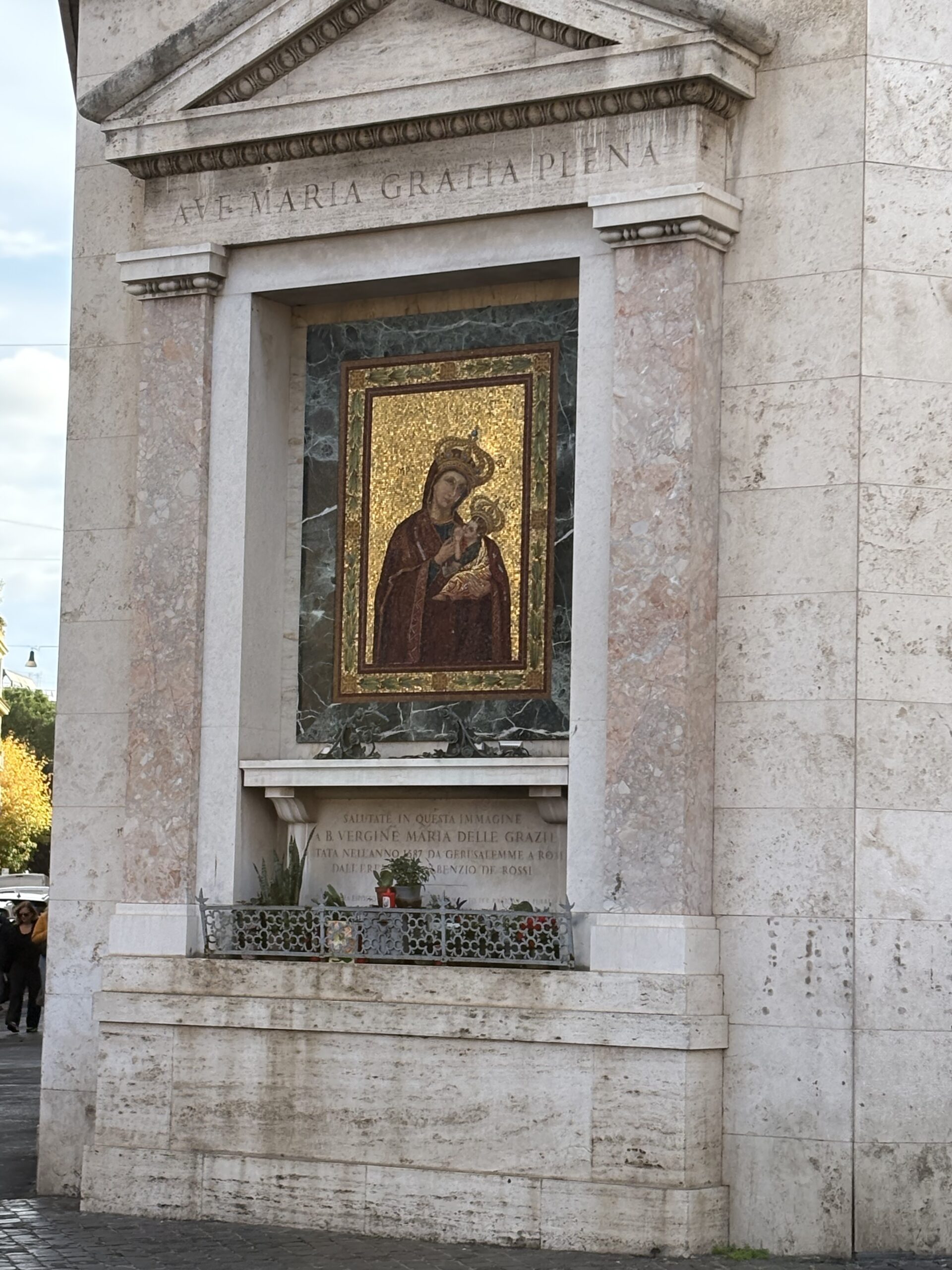
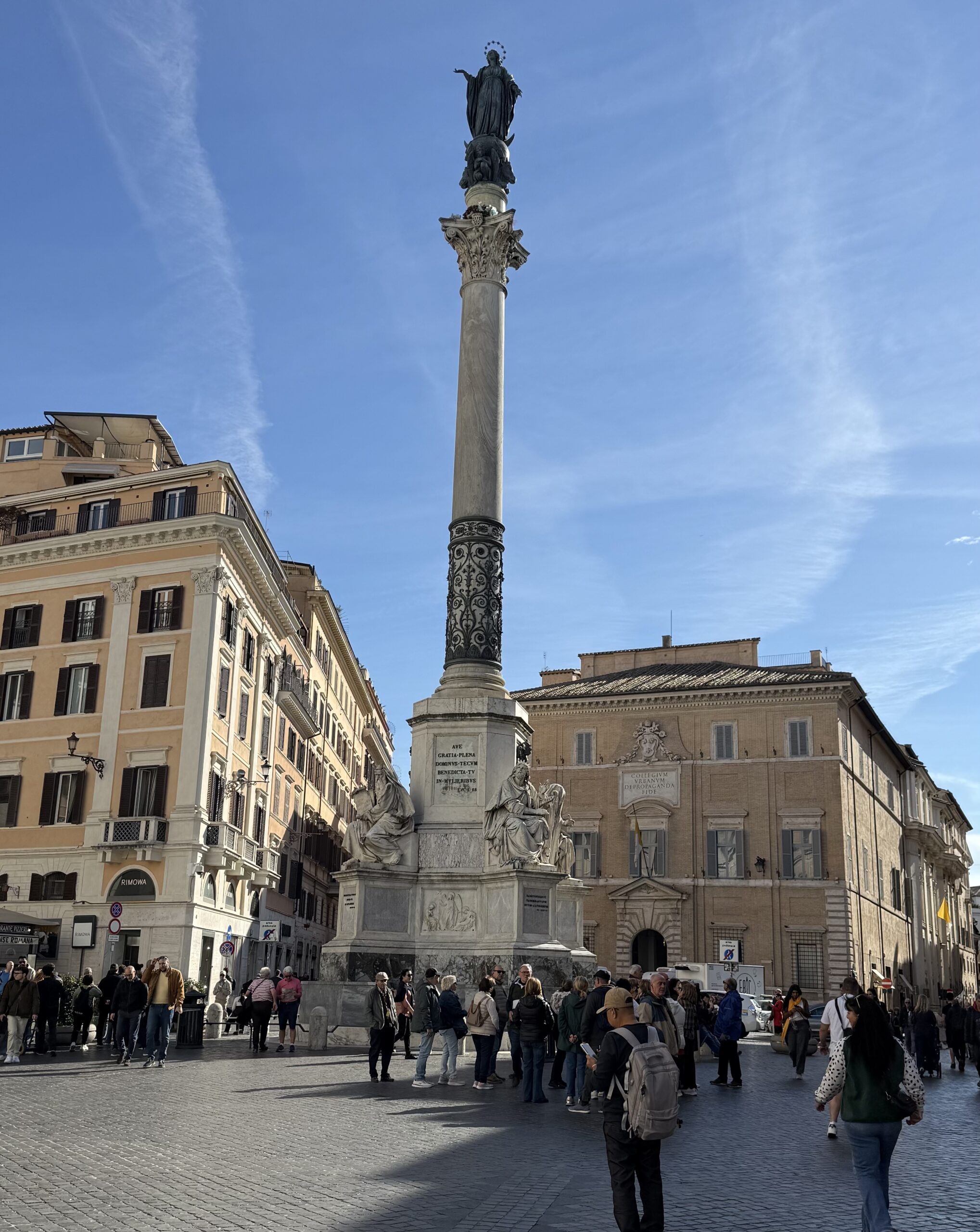
From the Madonnelle (icons and shrines honoring Our Lady) that are present on so many residential structures; the papal coats of arms that adorn civic buildings; the grand religious statues that serve as the focal point of numerous piazze, to the many dozens of street signs that bear the names of the Saints, the fingerprints of Christ the King and His Social Reign abound.
Needless to say, the presence of magnificent sacred treasure – altars, paintings, sculptures, and even the marble sarcophagi of deceased popes and saints – is especially noteworthy in Vatican City, but also in the many churches of Rome, from its most modest of parishes to its four major, and many minor, basilicas.
Taken as a whole, the sacred art and architecture in Rome has a catechetical quality to it insofar as much of it depicts important persons and moments in salvation history, most prominently, of course, the life and ministry of Christ.
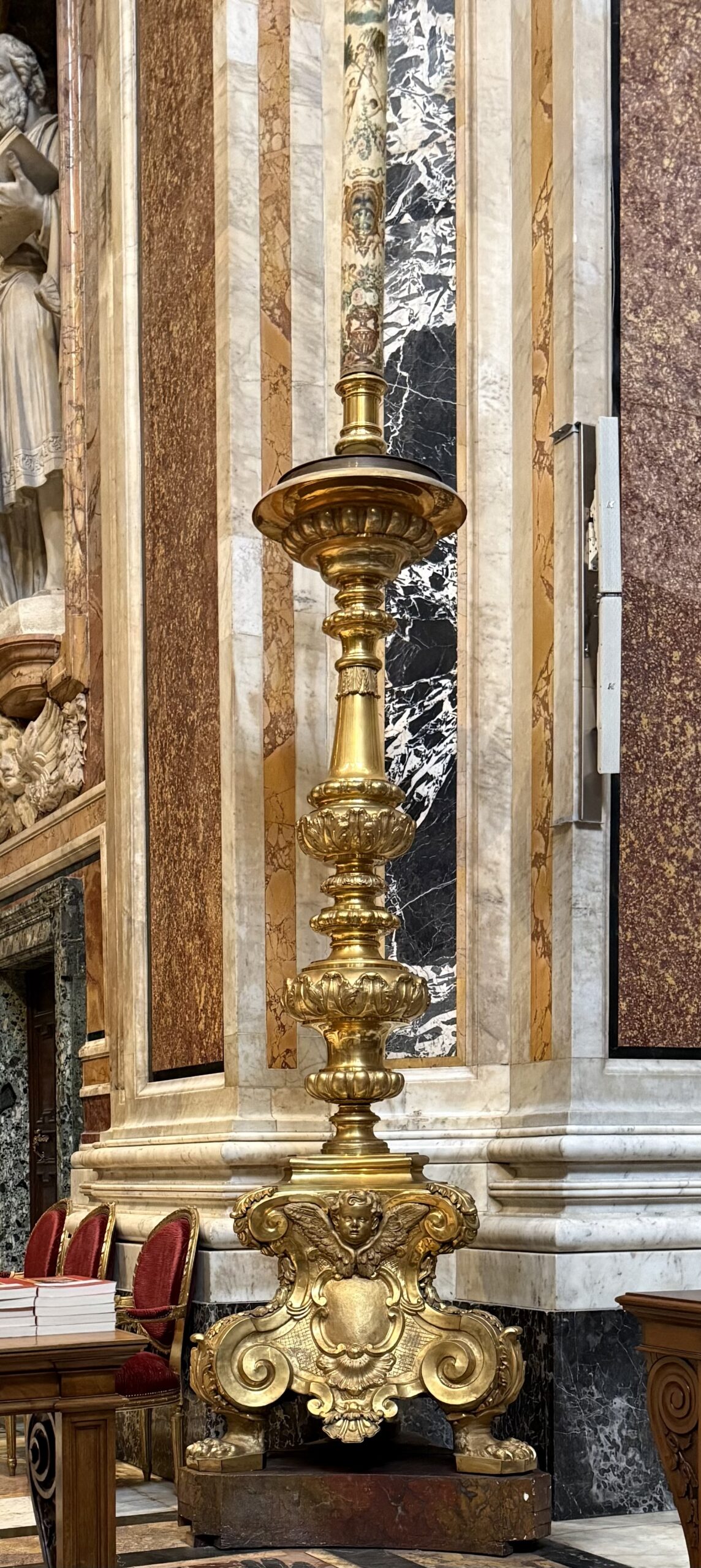
The architecture of the physical structures along with their sacred furnishings are simply breathtaking. One loses a sense of scale in the churches of Rome where it is not unusual to find much larger than life statutes, candelabrum over eight-feet tall, and ornate ceilings that soar many stories above the ground (over 100 feet in the case of St. Peter’s).
It’s an awe-inspiring experience and a great privilege to visit these places, and to see these things, in person. Even the most hardened anti-Catholic would be hard pressed to deny that the grace of God simply must have aided the men whose hands built the buildings, painted the paintings, and sculpted the statues.
Being immersed in the sacred beauty of Rome is not an entirely blissful experience, however. It is also heartbreaking and even infuriating.
Why?
Because so much of the luminous treasure that silently gives witness to the divine origins of our holy Catholic faith is juxtaposed against profane works that testify to the diabolical pedigree of the present darkness. Those with eyes to see cannot help but recognize the evil genius of the occupiers who, by commingling their earthbound rubbish with heavenly riches, have managed to lead many naïve souls to believe that the counterfeit conciliar church is the Holy Roman Catholic Church.
For instance, when traversing the Vatican Museum, one typically begins (as I did) by visiting the Raphael Rooms, a series of four individual rooms that contain stunning masterworks on both the walls (frescos) and the ceilings that bring biblical events, moments in Church history, and certain Catholic doctrines (e.g., the Real Presence, the Communion of Saints, the papacy) to life.
Moving toward and then through the last of the Raphael rooms – speaking for myself and no doubt countless others who have walked these halls – one cannot help but feel as though given a tiny glimpse of eternity where the entirety of salvation history is present all at once. Time seems to stand still in these rooms as the heart and mind are drawn heavenward to the point where one almost feels buoyant, the believer naturally finding himself moved to cry out in silent prayers of praise, thanksgiving, and gratitude.
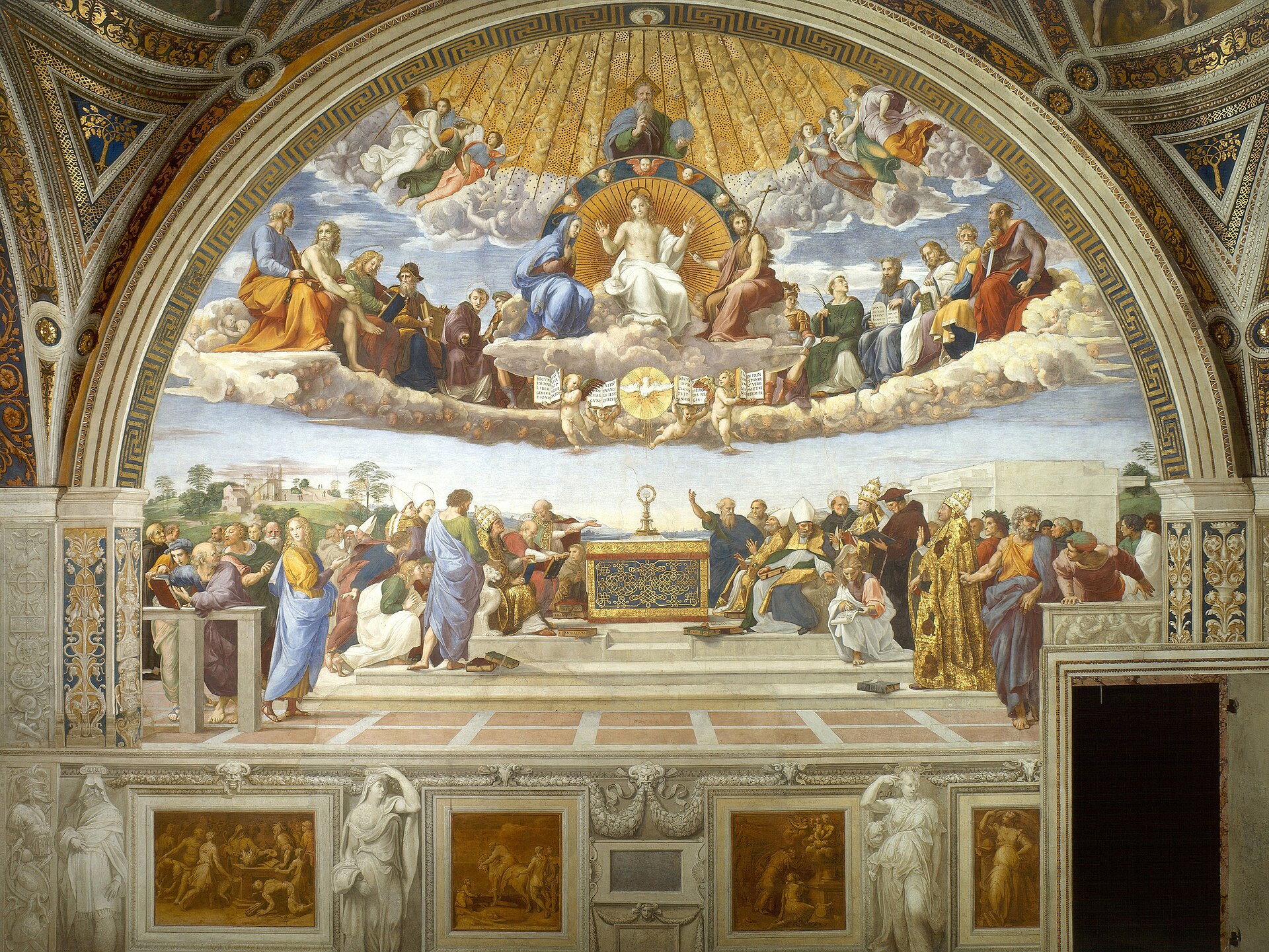
The sense of awe that one feels is overwhelming, not only as it concerns the indescribable beauty that meets the eye, but even more so the invisible grace that so obviously made it all possible, to say nothing of the uniquely tangible power and providence of God, the Source of all that is good, and beautiful, and true.
No, it’s not quite the same as being at Holy Mass, but Heaven, it seems at that moment, is somehow closer than earth.
Departing the Raphael Rooms, we enter into the Borgia Apartments, a series of six rooms where the visitor once again finds himself surrounded by similarly magnificent masterworks, such as Pinturicchio’s frescoes depicting the Resurrection of Our Lord, His Ascension into Heaven, and Pentecost, among other things.
Upon entering the rooms that comprise the Borgia Apartments, following the flow of visitors from all over the world, one naturally looks up at the frescoes that adorn the upper walls and ceiling.

More awe-inspiring beauty!
Moving along, as the people present spread out, the rest of the room becomes visible. It is then that one gets the sense that something isn’t quite right. (Look again at the photo.)
Under the heavenly Renaissance frescoes, one finds that the space has been infiltrated by contemporary works that, despite having religious themes, are stunningly crude and profane by comparison.
When first noticed, their presence is felt like an unceremonious slap in the face never to be forgotten. Not only are the eyes pulled back to earth, it’s as though one’s soul is being dragged along with them. The further one goes through the Borgia Apartments, the worse it gets.
I must admit that the commingling of the profane and the sacred in this area infuriated me so much that I failed to appreciate its isolated splendor. My mistake. Looking back, although I was there scarcely more than a week ago, this part of the museum is a blur to me now.
According to the Vatican Museum website:
The Collection of Modern and Contemporary Art [is] a selection of works that allude to the plurality of attitudes and languages adopted by artists in relation to sacred iconography, and proclaim the co-existence within this section of religious and lay subjects.
Regular readers can probably guess who gave birth to this sinister idea. The website tells us:
Emerging from Paul VI’s desire to reinstate the dialogue between the Church and contemporary culture, this young collection covers a time span from the end of the nineteenth century up to the early twentieth century, and enables the visitor to view unexpected masterpieces…
Masterpieces? Not so much. Unexpected? Yes and no.
One might say that the modern art on display here is unexpected in the sense that one does not expect to find a cockroach in one’s caviar. That said, those of us who realize that the See of Rome is occupied by Our Lord’s enemies can hardly be surprised to find that the humanist occupiers have fashioned earthbound trophies to the walls to celebrate their accomplishments and to mark their territory.
Making their way through the Borgia Apartments, visitors eventually come upon the space dedicated entirely to the Vatican’s Collection of Modern and Contemporary Art.
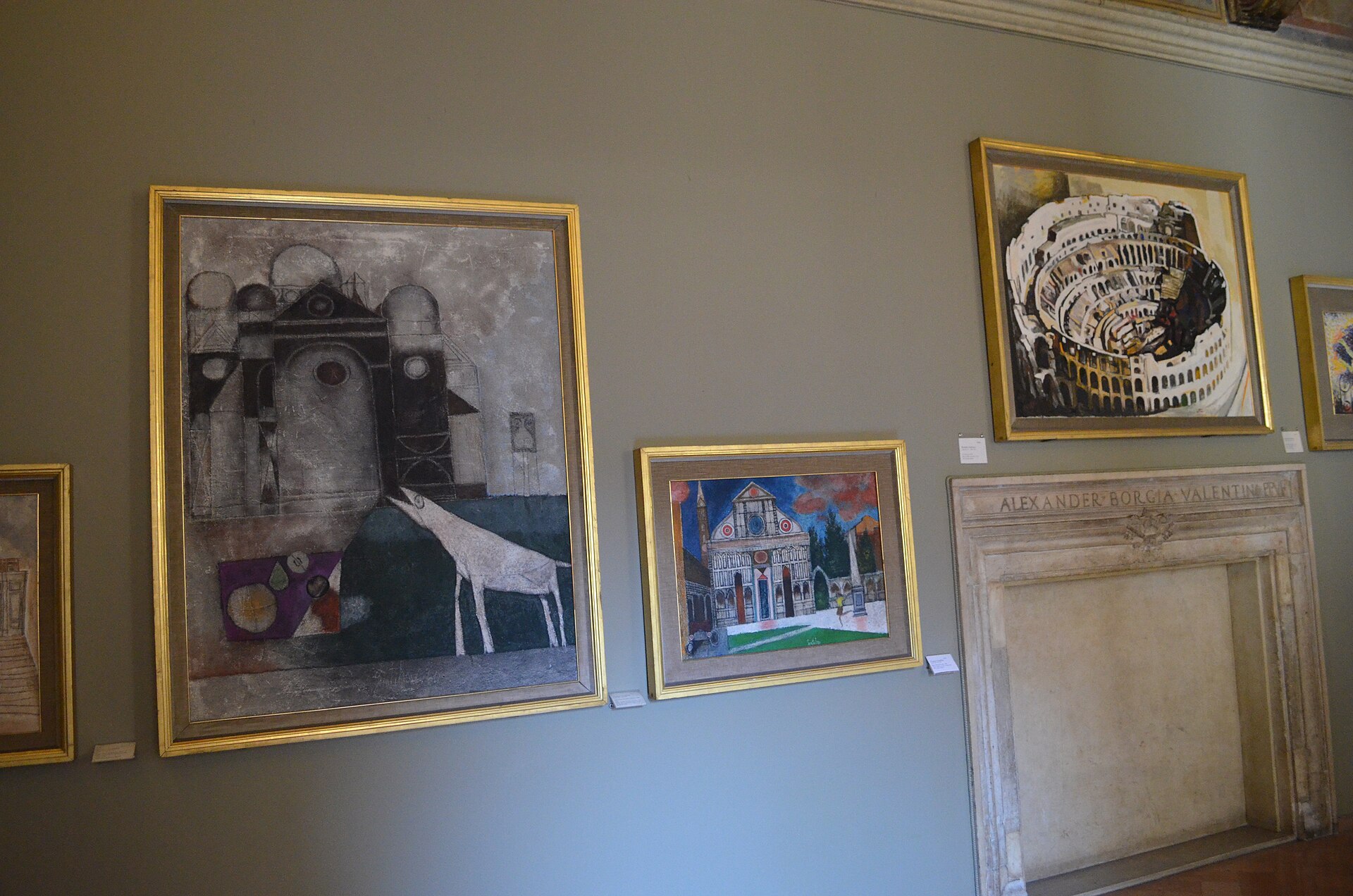
I couldn’t get past that junkyard fast enough.
NOTE: This is the path typically followed by visitors, one that moves through the Vatican Museum enroute to the Sistine Chapel where peace can be restored, in part, simply by studying Michelangelo’s ceiling, a masterwork that was painted over the course of fourteen years, no doubt, with the aid of God’s grace.
A defender of conciliar Rome might argue that the things that I found so objectionable are not such a big deal. After all, it’s just a museum.
I reject the idea that anything associated with the Vatican is trivial. Despite the emptiness of the Chair of Peter, its exalted status remains, and anything that distracts from that truth is noteworthy.
That said, the state of affairs in the churches of Rome is even more heartbreaking and infuriating.
In the interest of time (your time, dear reader) I will be as brief as possible.
It is a bittersweet experience to see so many beautiful, magnificently adorned, altars (whether a high altar or a side altar) upon which the Holy Sacrifice of the Mass of Ages had been offered for centuries on end, only to be obscured by the presence of a Novus Ordo table.
Take your time as you scroll down to view the photo below, taking in all of the glorious imagery that adorns the chapel ceiling and walls as you draw closer to the altar.
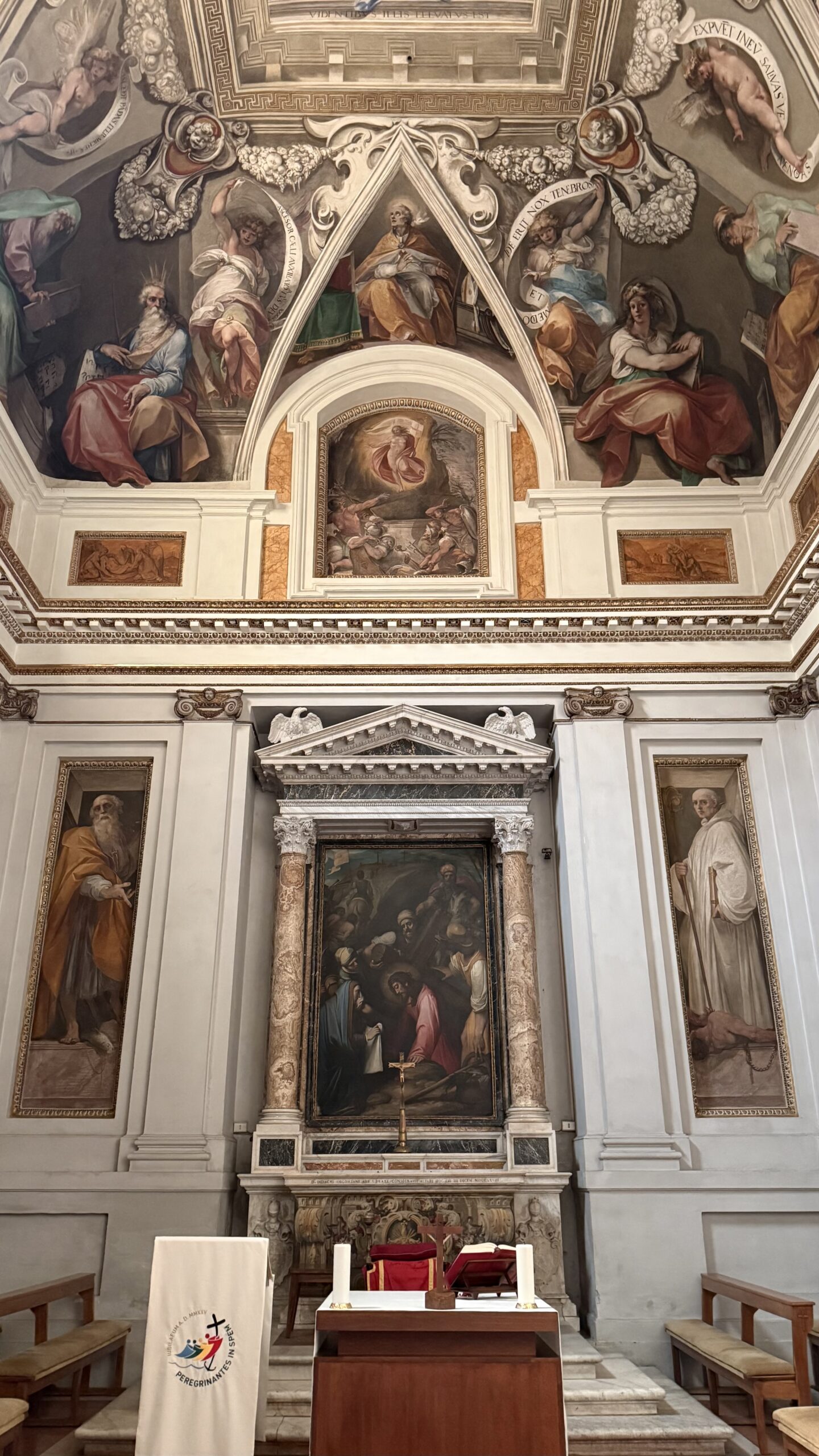
Notice in the photo above that the lectern is draped with a disgusting Bergoglian 2025 Jubilee banner, Peregrinantes in Spem (Pilgrims in Hope). One might reasonably wonder if Ikea sells the table and lectern as a matching set.
Another thing that stood out is the contrast between the tombs of certain pre-conciliar popes (read: true popes) and the conciliar anti-popes. Below is the tomb of Pope Pius XI, a fitting resting place for the Holy Father who gave us Mortalium Animos and Quas Primas by which he instituted the Feast of Christ the King.
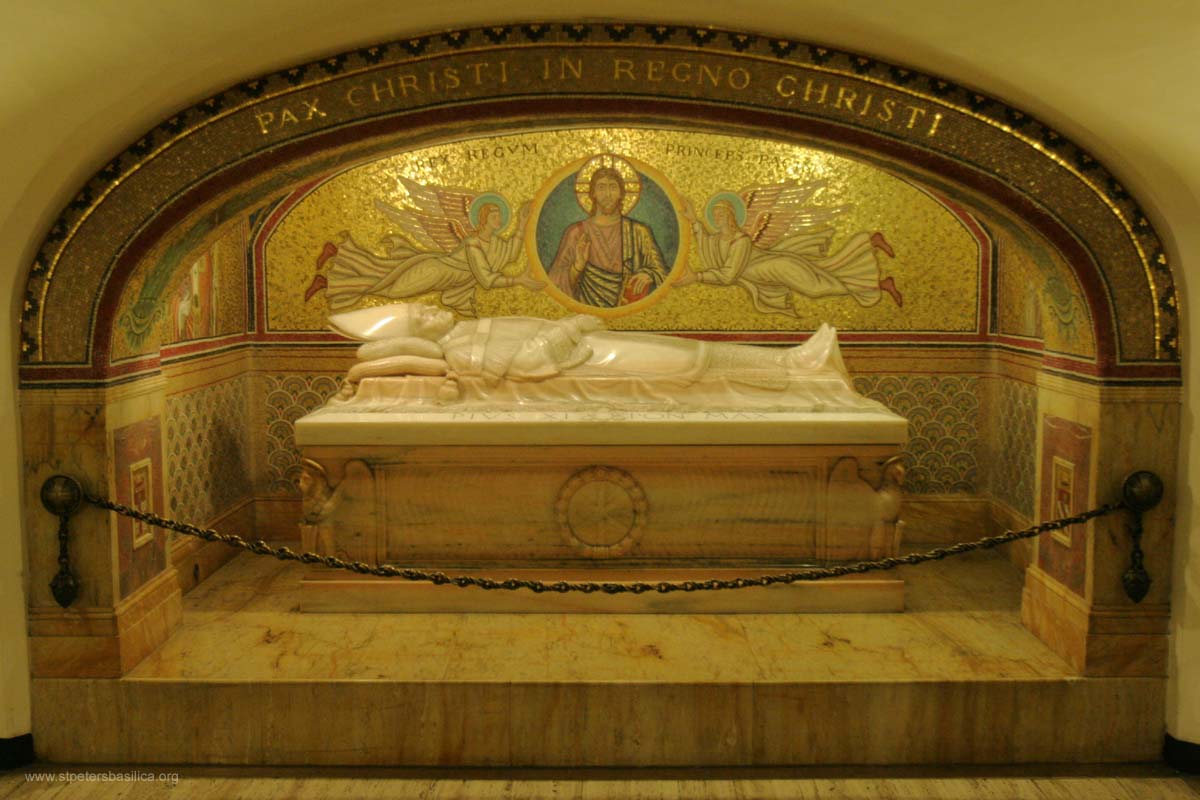
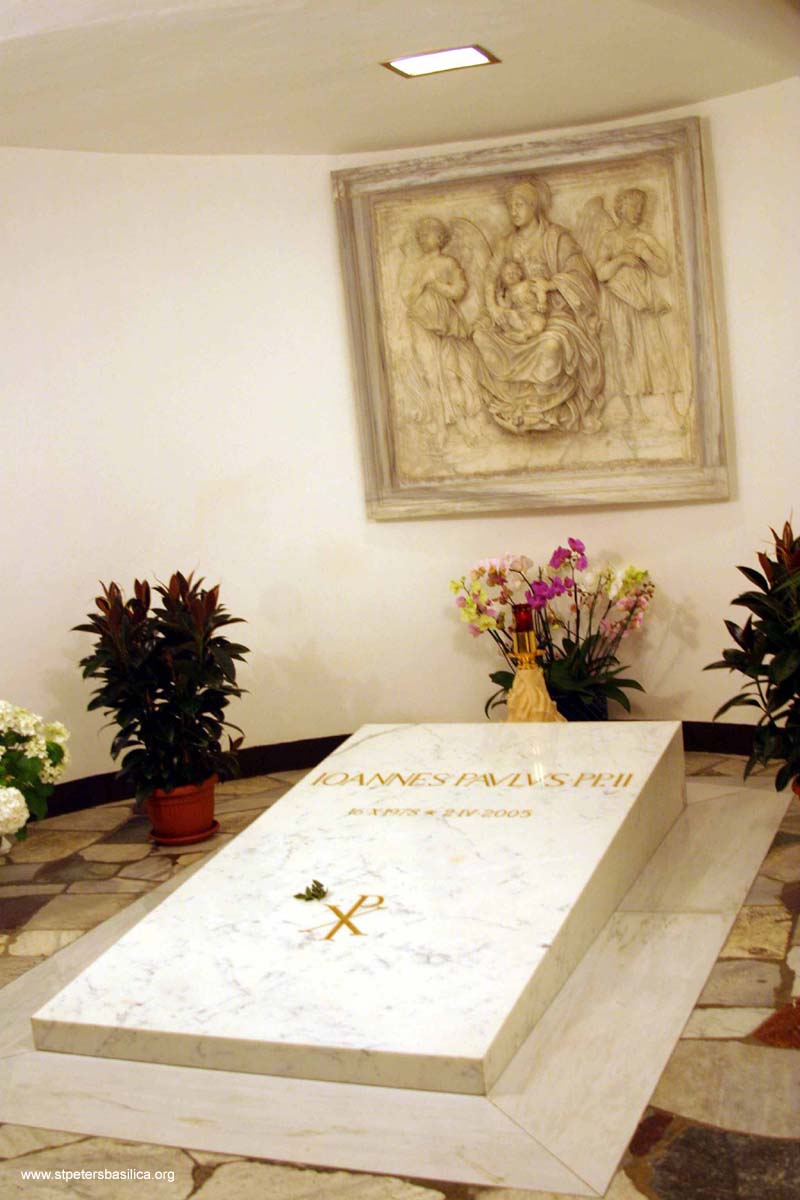
Contrast this with the photo on the right showing the final resting place of Karol Wojtyla, the Great Ecumenist (indifferentist, Islamist, and Talmudist), “saint” of the conciliar church. Montini, Ratzinger, and Bergoglio are buried likewise.
Again, we must admit, fitting, i.e., there is truth in advertising at play here.
Of the four anti-popes mentioned, Bergoglio’s tomb, unlike the others, is not to be found in the grotto at St. Peter’s, rather, he requested to be laid to rest at the Basilica of Santa Maria Maggiore.
Below (left) is a photo that I took of the altar in what is called the Borghese Chapel located in the Basilica of Santa Maria Maggiore, above which is the ancient Marian icon Salus Populi Romani (Protectress of the Roman People) which arrived in Rome in the latter part of the sixth century.
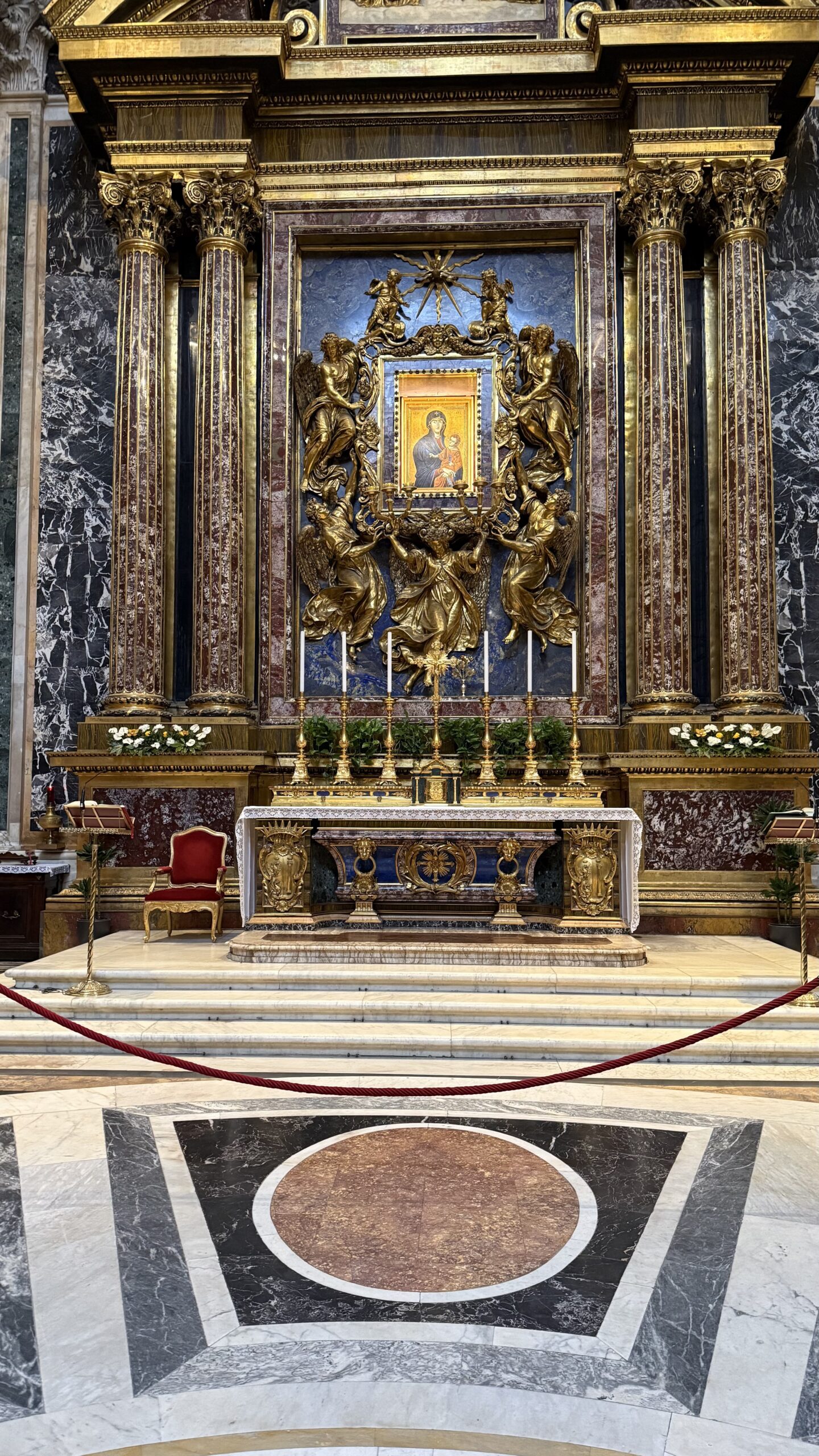
I was relieved to see that no Ikea tables were present. Now, look at the photo again and imagine walking up to that beautiful altar and placing a beach ball on it as Bergoglio did. The photos of him doing that were terrible, but seeing the altar in person drives home just how irreverent he truly was.
Lastly, and for me, the most genuinely shocking thing that I saw:
I stayed in a hotel located within view of the Piazza di Santa Maria Maggiore, the front of the Basilica. As the taxi bringing me from the airport neared the hotel, I noticed a huge digital billboard advertising what looked like an upcoming concert.
Must be some sort of performing arts center, I thought.
Wrong.
It was the façade of the pre-eminent Marian shrine in all the world, the Papal Basilica of Santa Maria Maggiore. A second digital billboard is attached to the rear of the church.
In 2024, the Chapter of the Basilica – a formal body of priests (aka canons) that oversee the Basilica – decided to erect the electronic billboards to raise funds for its upkeep.
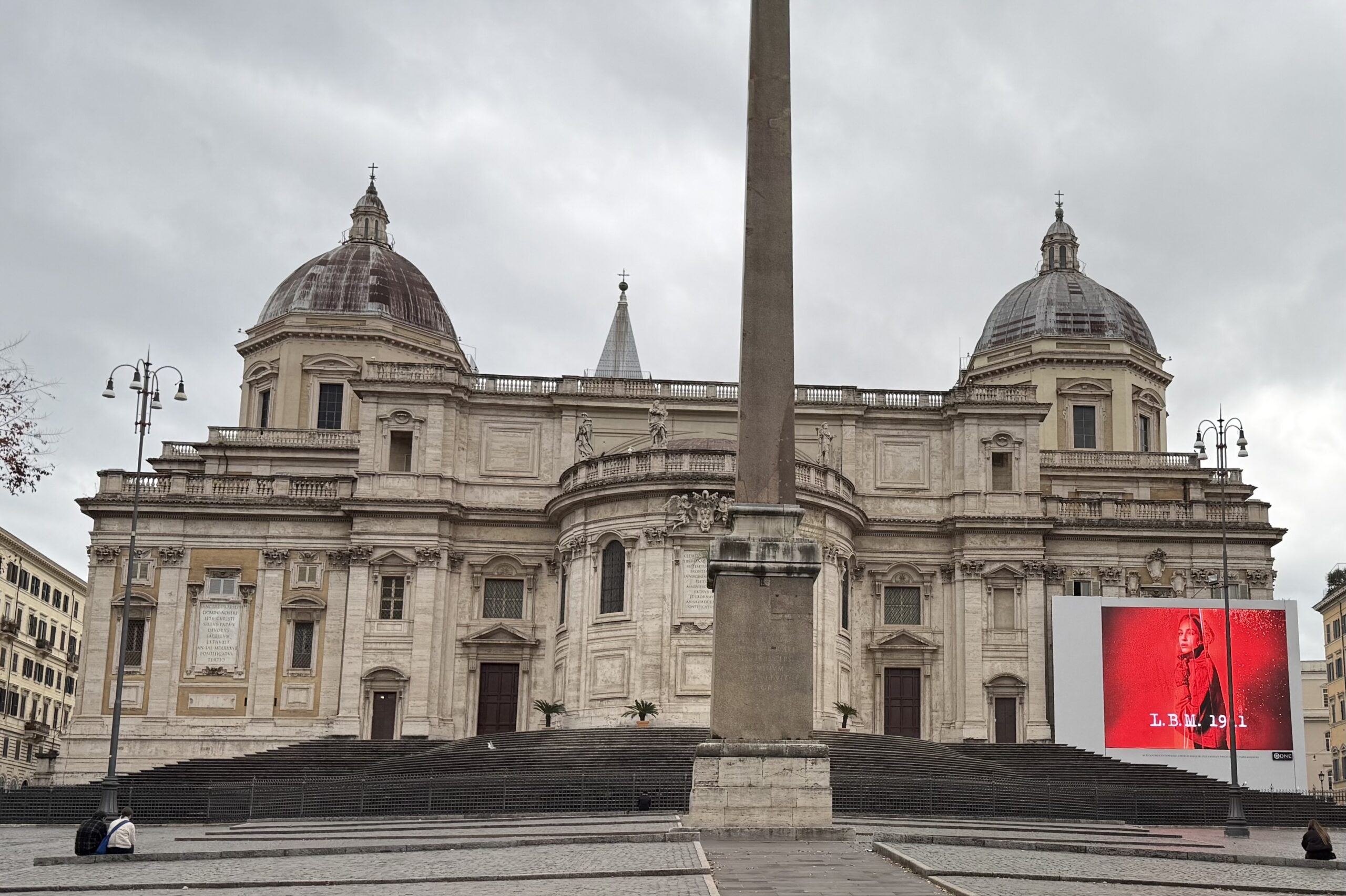
Bergoglio was reportedly aware of the decision (how could he not be) and obviously did not object. The billboards were temporarily removed for the 2025 Jubilee, then reinstalled in January of this year. They are scheduled for removal at the end of 2026. (I, for one, would not count on that.)
While the audacious unbelief of the occupiers is well known to me, that they would desecrate Our Lady’s Basilica in this way genuinely surprised me. Color me naïve.
To conclude this long post…
Concrete signs that testify to the fact that the once Holy See is occupied territory are impossible to overlook in Rome. So too, however, are sacred treasures that reaffirm its exalted God-given designation as the vital center of the Universal Church and the spiritual and moral center of the world.
For those who go there, the challenge is similar to the one that we face every day no matter where we might be, namely, not allowing the occupiers to totally obscure the enduring presence of the one true Church of Christ in this world, taking refuge in the promise of Our Lord that the gates of Hell will not prevail against her.